
Scratch Canvas Guides
How to Help Your Cat Use a New Scratcher
Start flat, let your cat explore it on their own terms, and change one thing at a time. The five steps come first; the reasons follow.
By Tanner and TaraUpdated
Introducing Scratch Canvas
Five steps you can start the day it arrives, with nothing to study first. Every cat sets their own pace, and these steps are built to follow it.
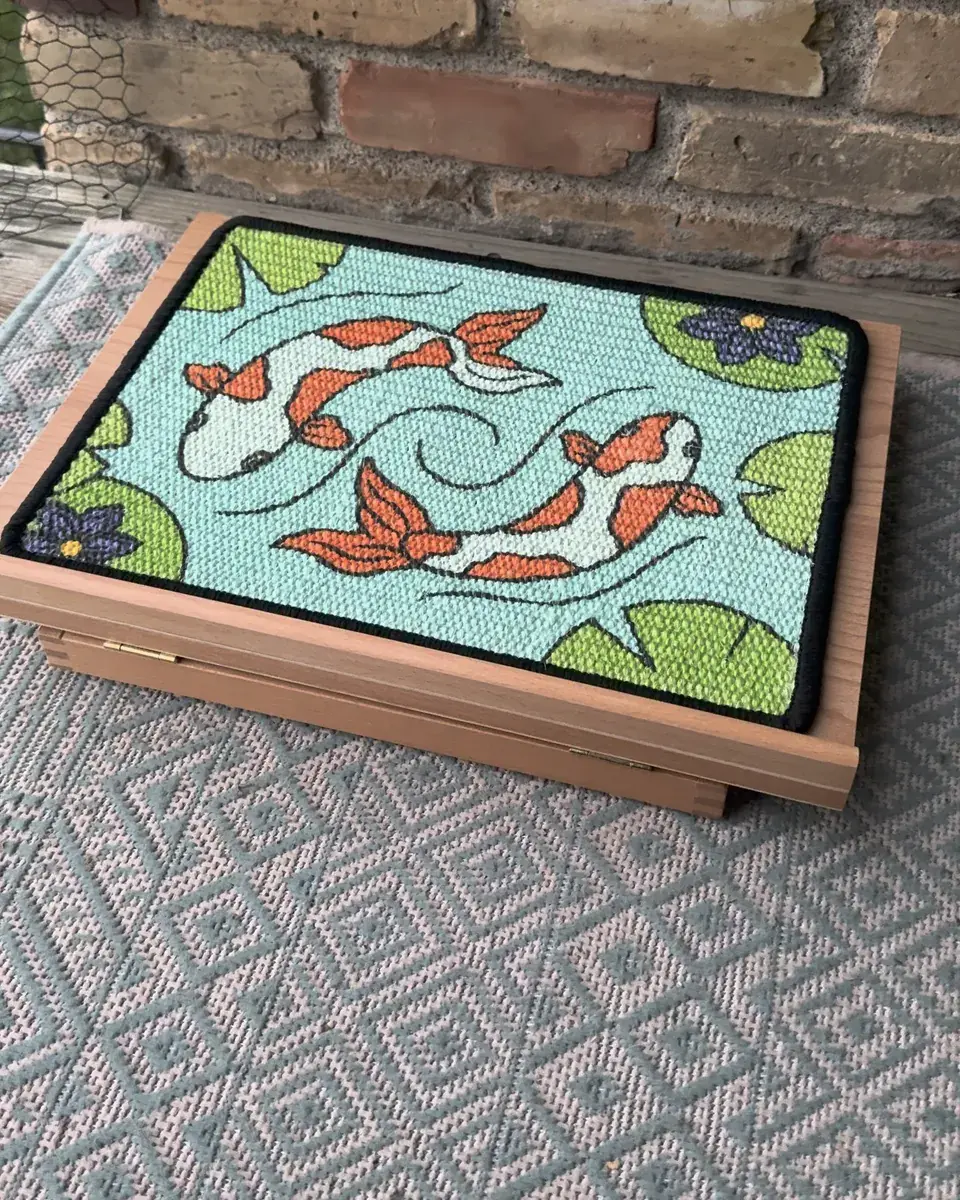
Start flat.
Set the assembled Scratch Canvas flat on a sturdy, level floor. The panel arrives installed, so leave it on.
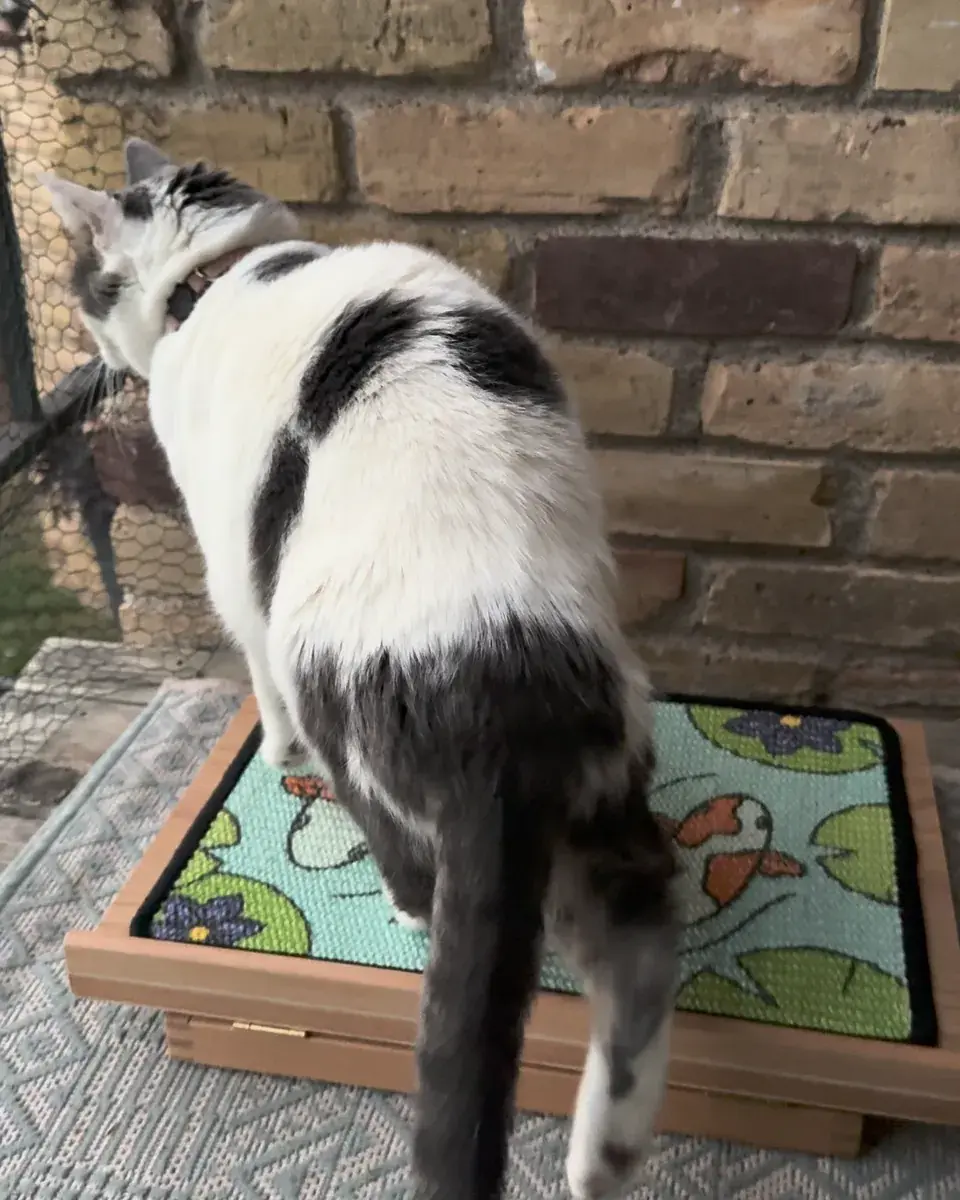
Let them explore.
Let your cat sniff it, walk on it, rub against it, or rest on it in their own time. Exploring is a good start, not a promise of scratching.
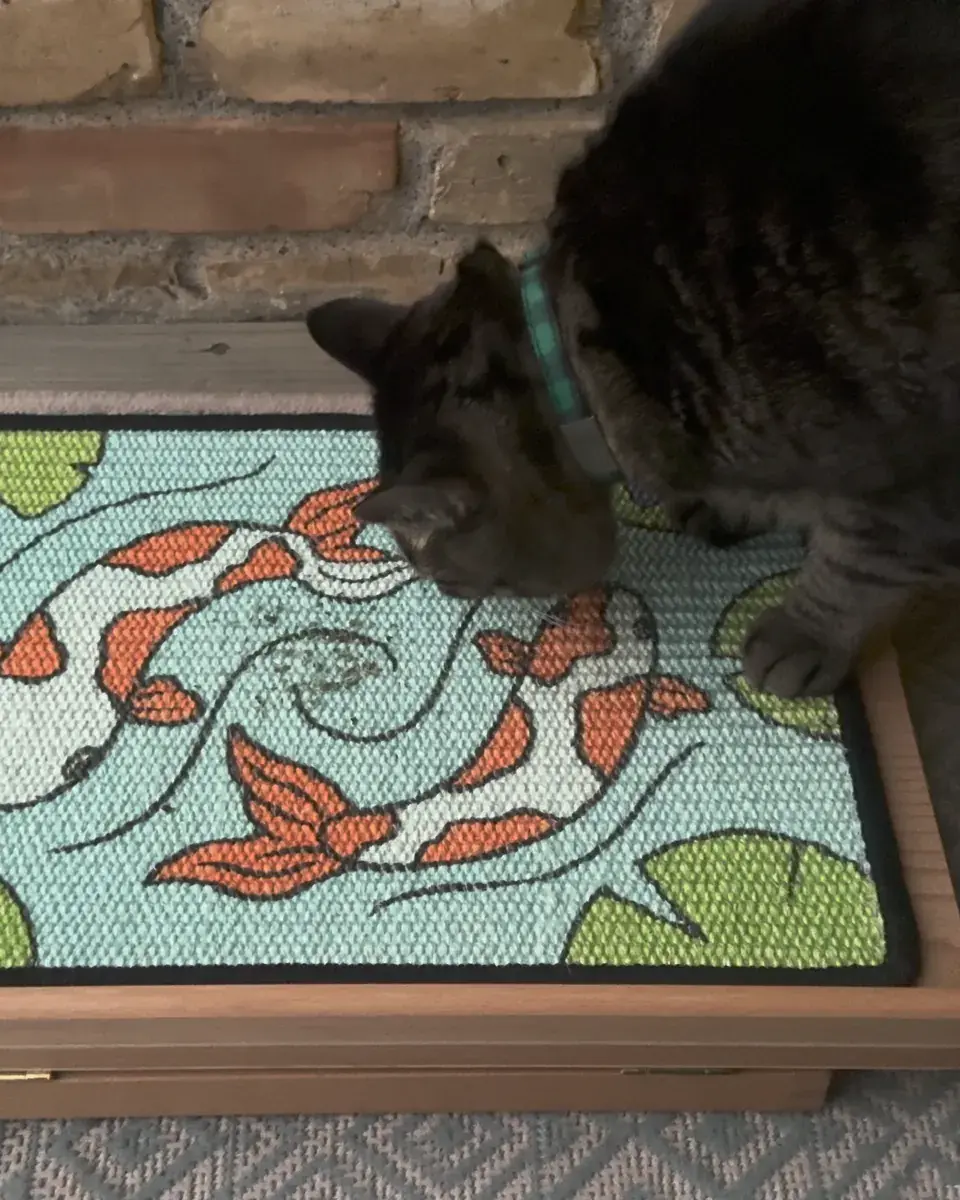
Invite curiosity.
Play with a favorite toy nearby, offer a treat they love, or add a little catnip if your cat enjoys it. Reward what they choose, and never place their paws on it.
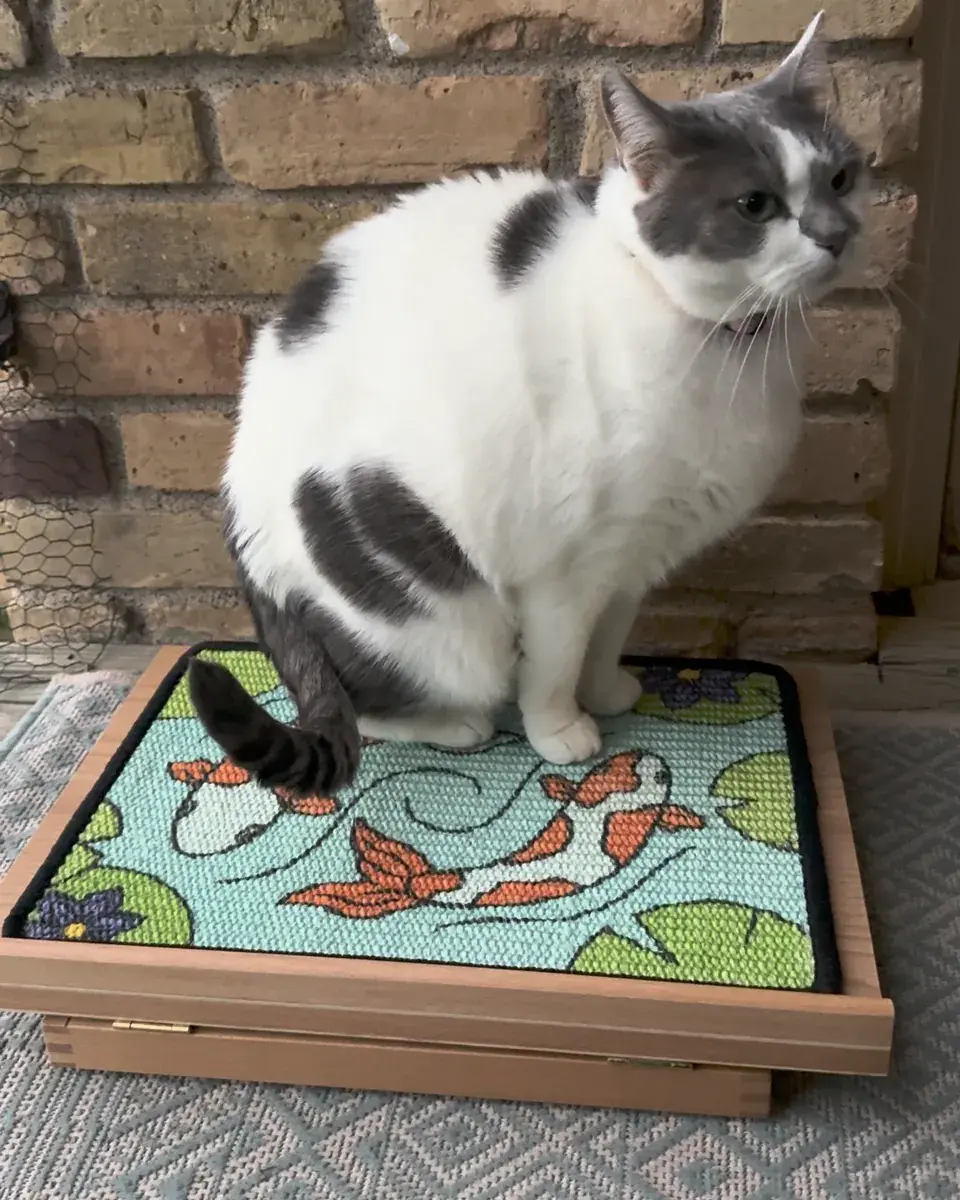
Follow their lead.
Keep it flat if they like it that way. Later, try a stable easel angle that suits how they scratch, with the rear support seated securely.
Adjust one thing.
Not interested yet? Change one thing at a time: the placement, then the angle, then the invitation. If it shifts or they avoid stepping on it, check stability first.
Deciding whether it suits your cat, or stuck after it arrives? Ask the Studio. Tanner and Tara will help you think it through and choose one next change.
Why we start flat
The first thing your cat does with a new scratcher may be nothing. Or, in our house, lie down on it.
That is not a failed introduction. It is the beginning of the part people often skip: letting the cat investigate, then adjusting the setup around what they already prefer. The principle behind every step above: do not try to make the cat fit the scratcher. Help the scratcher fit the cat.
Starting flat is our own way of introducing Scratch Canvas, not a veterinary rule. Laid flat, the assembled Scratch Canvas has no angle to set and no rear support to seat, so the first meeting is about your cat rather than the setup.
Flat is where the introduction starts, not where it has to stay. Veterinary guidance notes that most cats prefer to scratch upright and some prefer the floor, so the fourth step follows your cat to a stable angle as soon as they show you they want one.
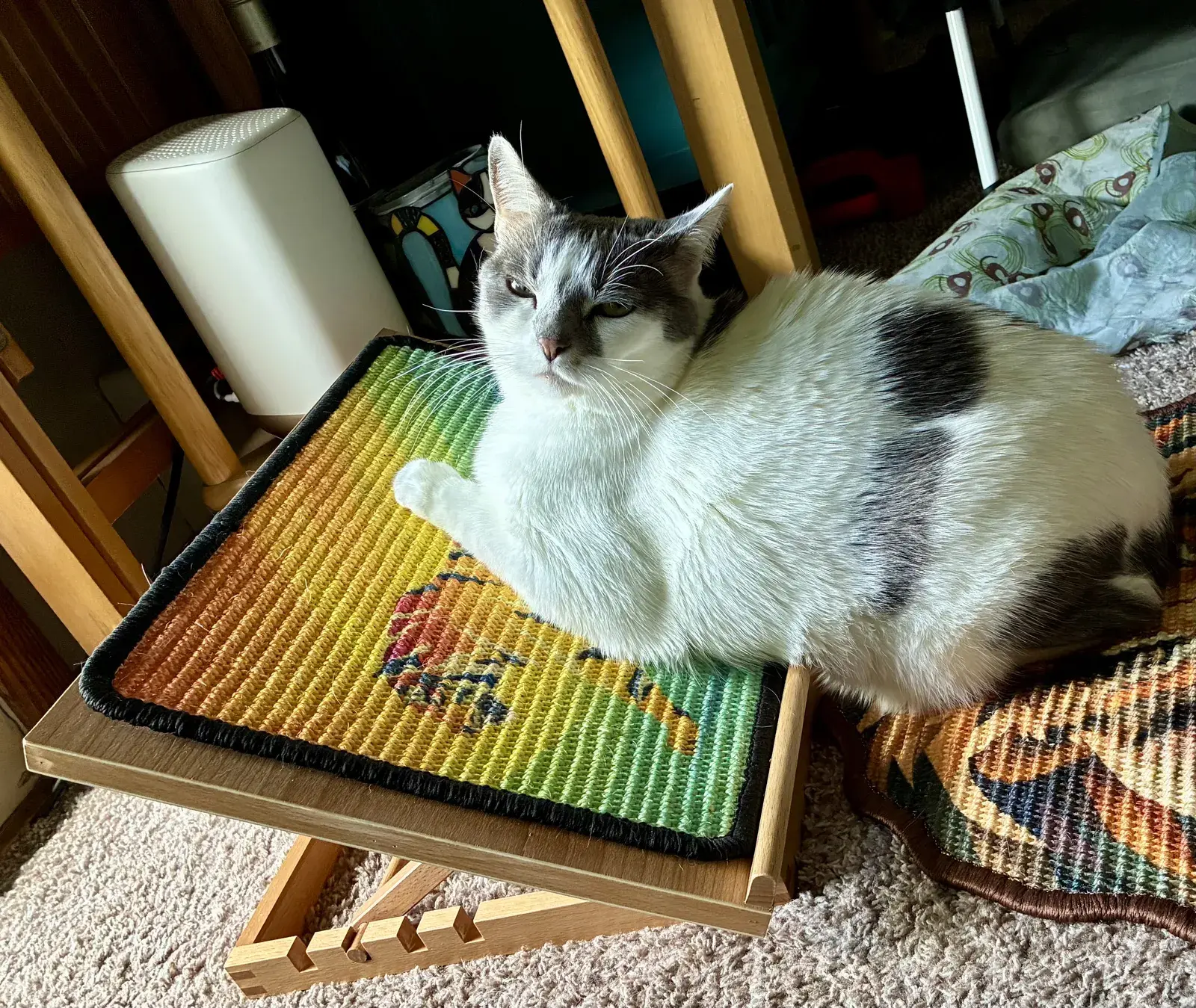
A nap is not a failed introduction
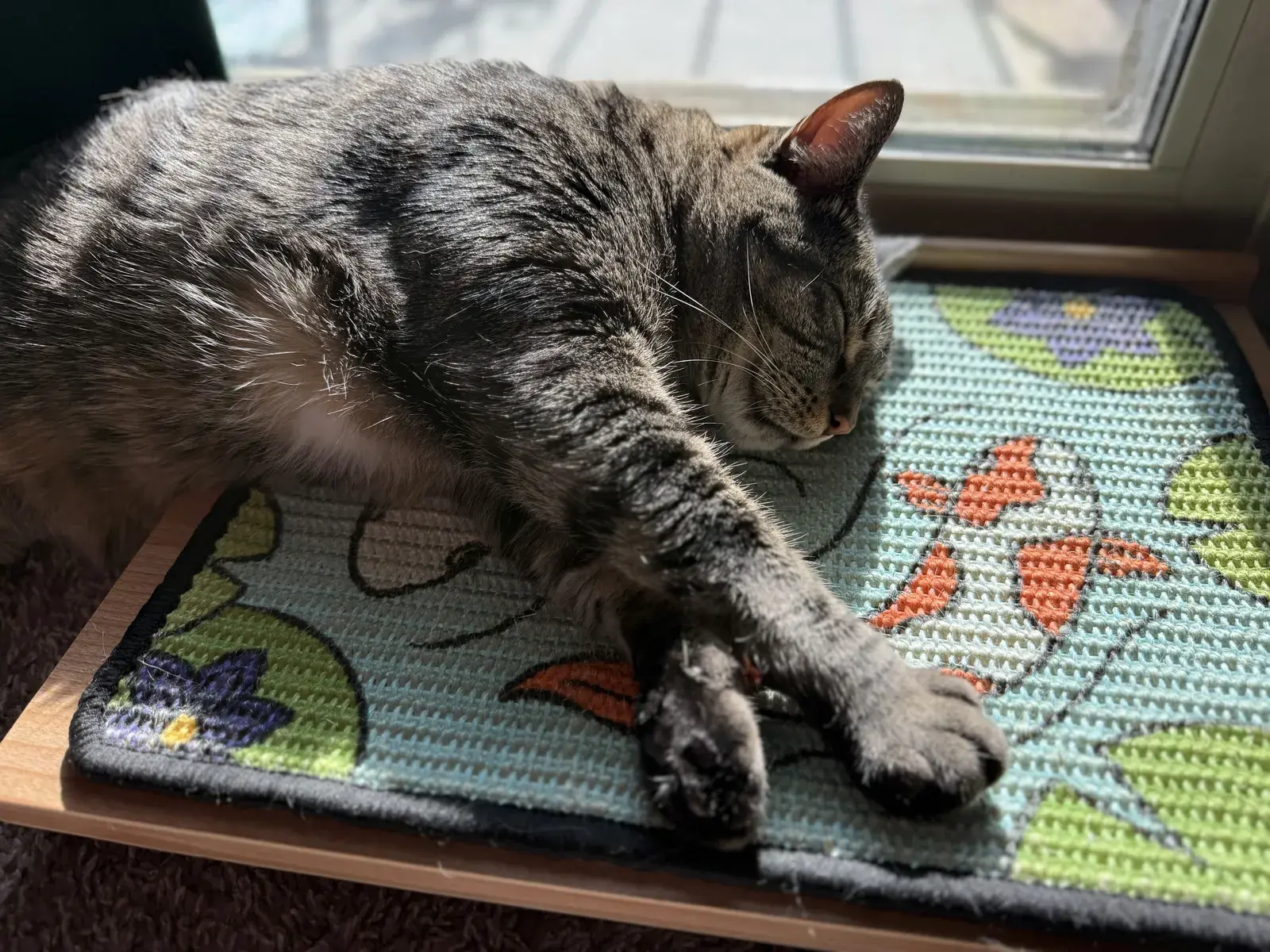
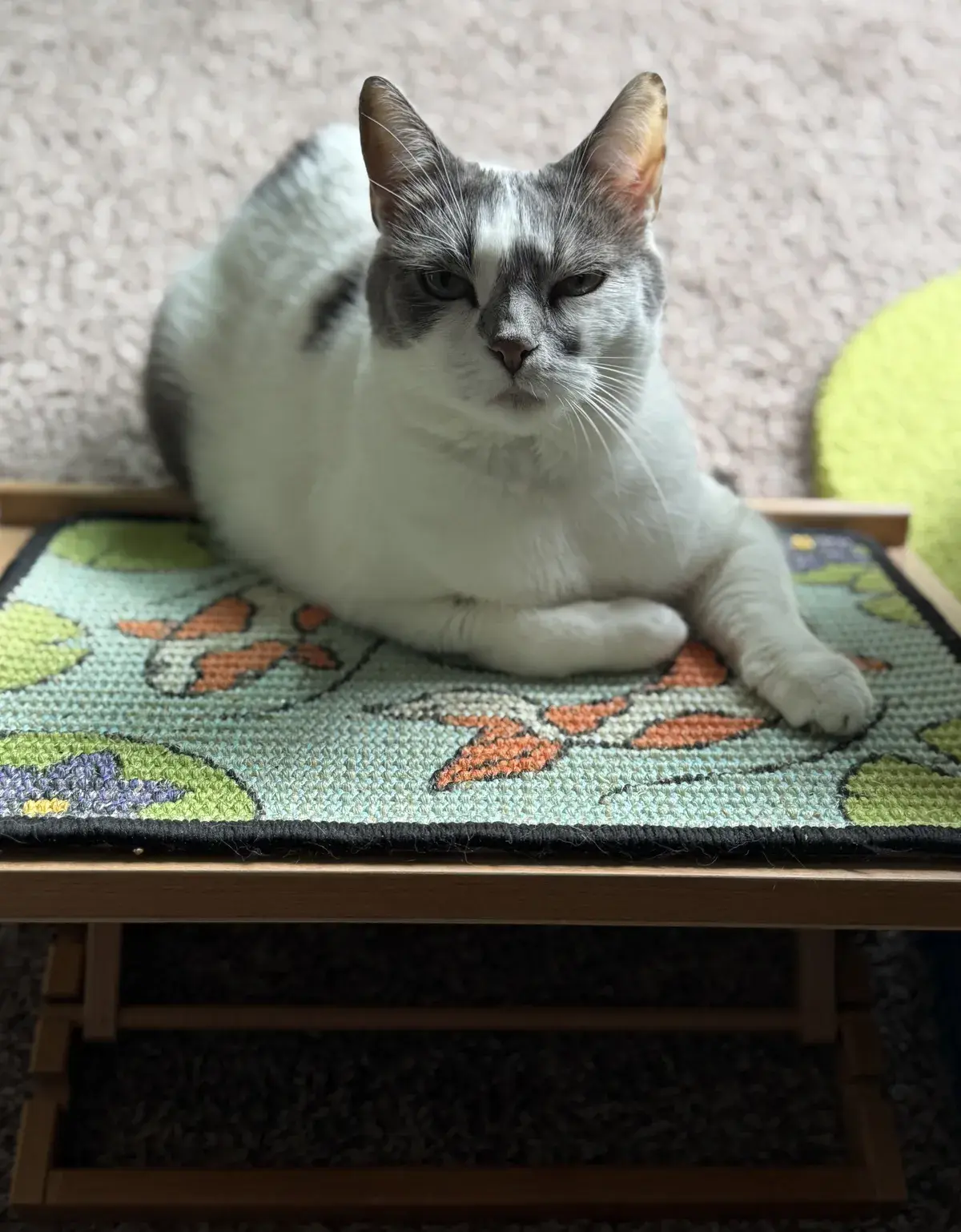
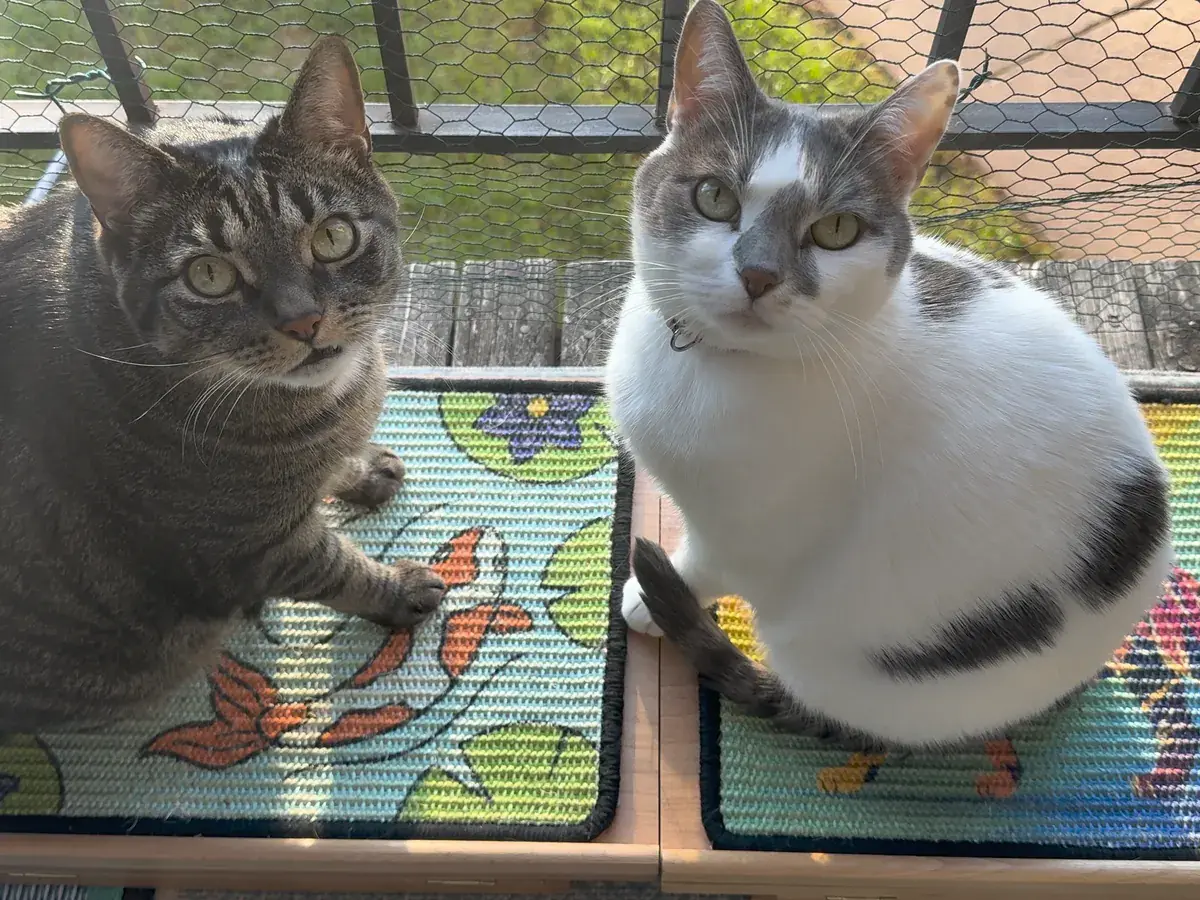
Here is the honest version of day one in our house. When we set a scratch panel completely flat, or barely tilted at the wooden easel’s lowest angle, Honey and Theo often choose to lie down on it. Sometimes they stay a while.
That is an observation of our own two cats, not published behavior guidance, and two cats is not a study. It still changed how we read introductions. A cat lying on a scratcher has not scratched it, and lying there is no guarantee they ever will. What they have done is chosen to be near the new thing, on their own terms, and that is where every good introduction starts.
So expect a quiet first day. Sniffing, one slow walk past, sitting beside it, a nap on top of it, or a stretch of pointed indifference are all normal. None of them is a verdict.
What to notice as you go
You do not need to study your cat before you start. Set it down flat and let the first days show you. These are the things worth noticing, because they tell you what to adjust:
- What they already scratch. A couch corner, a rug, a chair leg, the side of a cardboard box.
- How they work it. Reaching up an upright surface, raking along the floor, or something in between.
- Which room, and which route. Scratching tends to happen on prominent objects in busy places, near doorways and along the cat’s usual path through the home.
- Where they sleep. Cats often stretch and scratch right after waking, so a napping spot is a strong candidate when you try a new place.
- When it happens. After waking, when you come home, on the way through the living room. Timing tells you where the panel will actually be noticed.
None of it is homework. It is what makes the next adjustment easy to choose. If you want the why behind it, our first guide, Why Cats Scratch Furniture and How to Redirect Them, covers what scratching does for a cat and what their furniture choices reveal. This one stays with the how.
Flat, or an angle?
Scratch Canvas is one textured sisal scratch panel on an adjustable wooden easel with four settings. Every introduction starts flat, with the panel attached; after that, follow your cat. When you want an angle, the adjustable base seats the rear support in one of three notches:
- Flat. Where every introduction starts: the assembled Scratch Canvas set flat on a sturdy, level floor. Keep it here if they like it, especially if they rake rugs and carpets.
- The lowest easel angle. Panel on the easel, barely tilted. A gentle first angle to try when you are not sure which way your cat leans.
- The middle angle. A clear incline without going upright. Worth a turn for a cat who works at slopes, like the arm of a couch from the seat.
- The steepest angle. The one to try for a cat who already targets upright surfaces, like chair legs and couch corners.
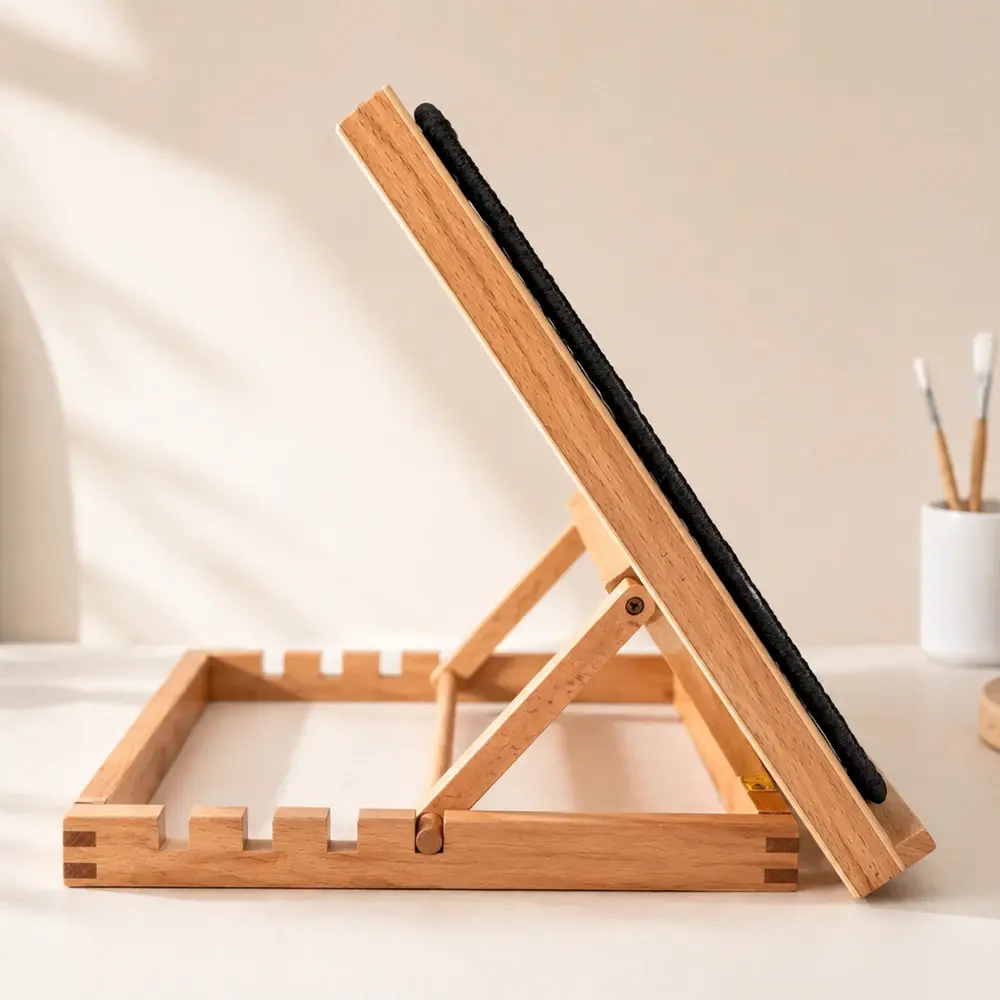
None of these is the correct one. They are four settings to try, and your cat settles it.
You can also lift the panel off and lay it on a stable, level floor: one more arrangement to try later, never a required step. A Scratch Panel bought without an easel works this way.
One honest limit: the panel measures 16 in W × 12 in H, and even at its steepest angle Scratch Canvas is not a tall vertical post. A cat who wants a full-height stretch with their paws above their head may want one of those as well. Scratch Canvas does not need to replace every scratching surface in the home.
Whichever position you use, put it on a sturdy, level surface, and at an angle make sure the rear support is seated before the first lean. A scratching surface that shifts underfoot rarely gets a second try. The setup videos show how to secure an angle, and later how to lift a panel off or swap designs.
Put it in the cat’s path
Placement is the first thing to change when your cat passes it by. The strongest spots are usually the ones the first days point to:
- Directly beside the furniture they have been scratching
- Next to a favorite sleeping or napping spot
- In a room your household actually spends time in
- Along their usual route through the home
The guest room is not the place to start. The point is to make the better option the easy one at the exact moment your cat wants to scratch.
The first location does not have to be permanent. Once your cat is using the panel consistently, you can walk it gradually toward wherever you would rather have it. The Ohio State Indoor Pet Initiative suggests moving an established scratcher no more than about three inches a day; treat that as placement advice rather than a universal rule, and if use drops off, move it back and go slower.
More than one surface, in more than one room, is a normal setup rather than an excessive one, especially in a home with more than one cat.
Inviting curiosity
Placement gets the panel into the right part of the room. The invitation is quieter work, and none of it is required: use whichever of these your cat actually enjoys.
Let them investigate on their own terms
Expect sniffing, cheek rubbing along the frame, walking across it, lying on it, and ignoring it, sometimes all in the first hour. All of that is voluntary investigation, and all of it counts.
One thing to skip entirely: do not carry your cat over and rub their paws against the panel. It looks harmless and it can backfire. Guidance from Humane World for Animals warns that it can create a stress response in some cats and teach them to avoid the scratching surface afterwards. It is the one introduction that can actively set you back.
Bring the play to it
Play near the panel rather than at it. A wand toy arcing around and across the surface lets your cat land on the panel in the middle of a chase, which is a much better introduction than any amount of pointing. The panel becomes part of the game instead of the point of it.
Add a little catnip, if your cat enjoys it
A little catnip rubbed or sprinkled on a new scratching surface is a common invitation, and an entirely optional one. Not every cat responds to catnip. If yours is not interested, skip it; play or a favorite treat is the better draw.
Reward the moment it happens
When your cat uses the panel, or even paws at it, reward them right away. Immediately matters more than generously: the FelineVMA’s Cat Friendly Homes guidance puts the useful window at about three seconds, so the reward lands on the behavior rather than on whatever happened next.
What counts as a reward is personal. A treat, a minute of interactive play, petting, or simply your attention are all on the list, and different cats rank them differently. Use the one your cat actually values.
And no corrections. No spray bottle, no raised voice, nothing designed to startle, no physical punishment. Veterinary guidance is blunt about this: punishment increases undesirable scratching rather than reducing it, and cats do not connect it to the thing you meant.
When it is not clicking yet
Change one thing at a time, so you can tell what helped, and give each change a fair chance in your cat’s ordinary routine before you try the next. Then find your situation below.
Weighing a return? Contact us within 14 calendar days of delivery, or purchase for in-person sales, even if you are still trying new setups. The Returns & Refunds policy has the details. Ask the Studio is here for the next change along the way, and the return window stays the same while we help.
- They walk past it
- Adjust one thing: first the placement (beside a spot they already scratch, or near where they nap), then the angle, then the invitation. Give each change a fair chance in their ordinary routine before trying the next.
- They sniff it or lie on it, but do not scratch
- That is exploring, and it is a good start, not a failure. Leave the setup where it is, keep play arriving nearby, and reward any pawing the moment you see it.
- They keep scratching the furniture
- Move Scratch Canvas right beside the piece they target, set the way they use it: flat for a rug they rake, angled for the side of a couch. Reward it every time it wins.
- It shifts, or they avoid putting weight on it
- Check stability before anything else: a sturdy, level floor, and at an angle, the rear support seated fully in its notch. If it still moves, go back to flat. A surface that shifts under a first paw rarely gets a second one.
- They reach higher than the panel allows
- Try the steepest angle. If they still stretch past the top edge, that is a cat asking for a tall, sturdy vertical post as well, not a cat rejecting scratching.
- Their scratching suddenly changes
- A sudden change in scratching, or scratching that arrives with other unusual behavior, is a question for your veterinarian first, not a setup problem.
One scratcher does not have to do everything
Some cats settle on one surface. Plenty want several: a texture for the morning stretch, an orientation for the hallway, a spot in each room the family uses.
Scratch Canvas covers the flat-through-steep range in one piece and is made to be moved. What it is not is a tall vertical post, and a cat who wants that full-height stretch should have one too. Matching the setup to the cat, instead of promising that one object fits every cat, is the idea this product is built on.
Move the canvas, not the cat
The first days are information, not a verdict. Some cats claim a new surface the first afternoon. Some sleep on it for a month before they ever scratch it. Some tell you plainly that they want a different angle, and that is worth knowing too.
When nothing is happening, change one thing and wait. The spot. Then the angle. Then the invitation. One variable at a time is what makes the answer legible.
Follow their lead. Move the canvas, not the cat.
Still deciding? See the Scratch Canvas sets, or Ask the Studio whether it suits your cat.
Related reading: Why Cats Scratch Furniture and How to Redirect Them, the behavior guide behind this one.